Pop culture
Case studies of racialization in contemporary Europe and the online space
THE RISE OF ONLINE HATE GROUPS & DIGITAL MYTH CREATION: THE ROMA

Despite the emergence of the Internet, anti-discriminatory messages, and education networks all across Europe, the xenophobic myths around ‘The Jew’ and ‘The Roma’ have not been forgotten; they have merely changed their form. Both messages often coexist within the same groups; however, it seems that they are rather different in nature and stem from different sources. Moreover, while antisemitism has moved to the area of fringe, generally rejected ideas, antiromanyism is not frowned upon in the same manner, and is rather popular on a casual level. On the other hand, anti-Roma myths do not get created, supported, or distributed by the same fringe groups and agents as antisemitic sentiments — on the contrary, just like ‘casual’ Islamophobia, they are perpetuated through personal stories turned into myths, perceptions, and media. For instance, “the front page of the internet”, the website Reddit, which generally tends to be harsh towards antisemitism, is rather relaxed when it comes to ‘critically’ discussing Roma people.
“I believe gypsies are bad for Europe and should not be welcomed in other countries. CMV [Change My View]” — says one post on the forum (Reddit, 2020). While it’s situated on a page for often controversial opinions, it’s not quite criticised by commentators, even when they are trying to ‘change the view’ of the original poster. “I don't consider it racist because "gypsy" is not a race, but a lifestyle and culture”, the author says. The comment is upvoted — supported, then — and clearly indicates that simply upholding Roma culture is something inherently bad. Another post, on the board for Ontario citizens, features a news piece on a family of Roma people being refused entry to Canada. It’s not a board known for its racism, antisemitism, or anything of that nature; however, many of upvoted comments feature some of the same opinions on Roma people not deserving the same treatment as everyone else: “As a Canadian, I was shocked to see the volume of damage that families of Gypsies did to my apartment building.” “I have only had bad experiences with the Roma. A culture based on thievery and being nomadic doesn't really work in places like Canada. No wonder they are preventing them from boarding.” (Reddit, 2020)
The quotes speak for themselves. The culture itself is pictured as inherently flawed; certain bad personal experiences with people assumed to be Roma are seen as a proof strong enough to support beliefs — therefore creating a bias towards Roma people, ensuring such assumption-based experiences further. Notably, none of the comments are deleted or flagged, despite Reddit’s lately strict anti-racist and anti-hate speech policies. Antiromanyism is simply not viewed as such in online spaces.
Of course, the wide-spread racist views towards Roma are also expressed in mass media and policy. One Roma writer lists such occurrences: the Sun’s open “War on Roma” campaign in 2005, expatriation of Roma people from France in 2010, Conservative Manifesto of the UK with openly anti-Roma policies, and Tory candidates publicly marching against Roma people. This creates a self-perpetuating dead cycle, where personal, even online opinions find reflections in policies and public spaces, and those in return empower these private opinions further.
Of course, the wide-spread racist views towards Roma are also expressed in mass media and policy. One Roma writer lists such occurrences: the Sun’s open “War on Roma” campaign in 2005, expatriation of Roma people from France in 2010, Conservative Manifesto of the UK with openly anti-Roma policies, and Tory candidates publicly marching against Roma people. This creates a self-perpetuating dead cycle, where personal, even online opinions find reflections in policies and public spaces, and those in return empower these private opinions further.
THE RISE OF ONLINE HATE GROUPS & DIGITAL MYTH CREATION: THE JEWISH
Unlike the creation of the anti-Roma myth online, antisemitic groups have to work through an elaborate system of dog-whistles (disapproving remarks made using an in-group reference of language, often with racist connotations) and symbolism in order to be made visible. As noted in my first post, online policies are rather harsh about antisemitism — at least, on the surfaces, against the most open and obvious antisemitic sentiments and slogans. Reddit is quickly banning hate-communities, antisemitic messages and themes; the same goes for Twitter and other large media platforms. According to a study “Antisemitism on Twitter” (Ozalp et al., 2020), most of antagonistic messages directed at Jewish people gain little attraction and rarely survive for a long time — policies and algorithms set by social media, the author concludes, prevent antisemitic hate messages from spreading widely and becoming overly common.
These attitudes are also reflected in policy and large media. The European Council officially recognises the threat of antisemitism online and is working on a common policy to combat it (European Council, 2020). CNN and other news outlets openly call for a global fight against antisemitism online (CNN, 2020). All these policies force antisemitic groups to go “underground” and use obscure ways to spread hate and create myths. One of the recent studies, “A Quantitative Approach to Understanding Online Antisemitism” (Zannettou & Blackburn, 2018) concludes that, firstly, fringe communities such as /pol/ (a political subpage of a popular anonymous message board) are using antisemitic slurs and language increasingly frequently; coded language for racial slurs is becoming increasingly diverse (authors noted an “explosion in diversity”), and that the outbursts in antisemitism are tied to real-world events, particularly related to conservative policies, such as Donald Trump’s inauguration or the Charlottesville rally. Again, we see proof that the online world and political policies strongly influence each other.
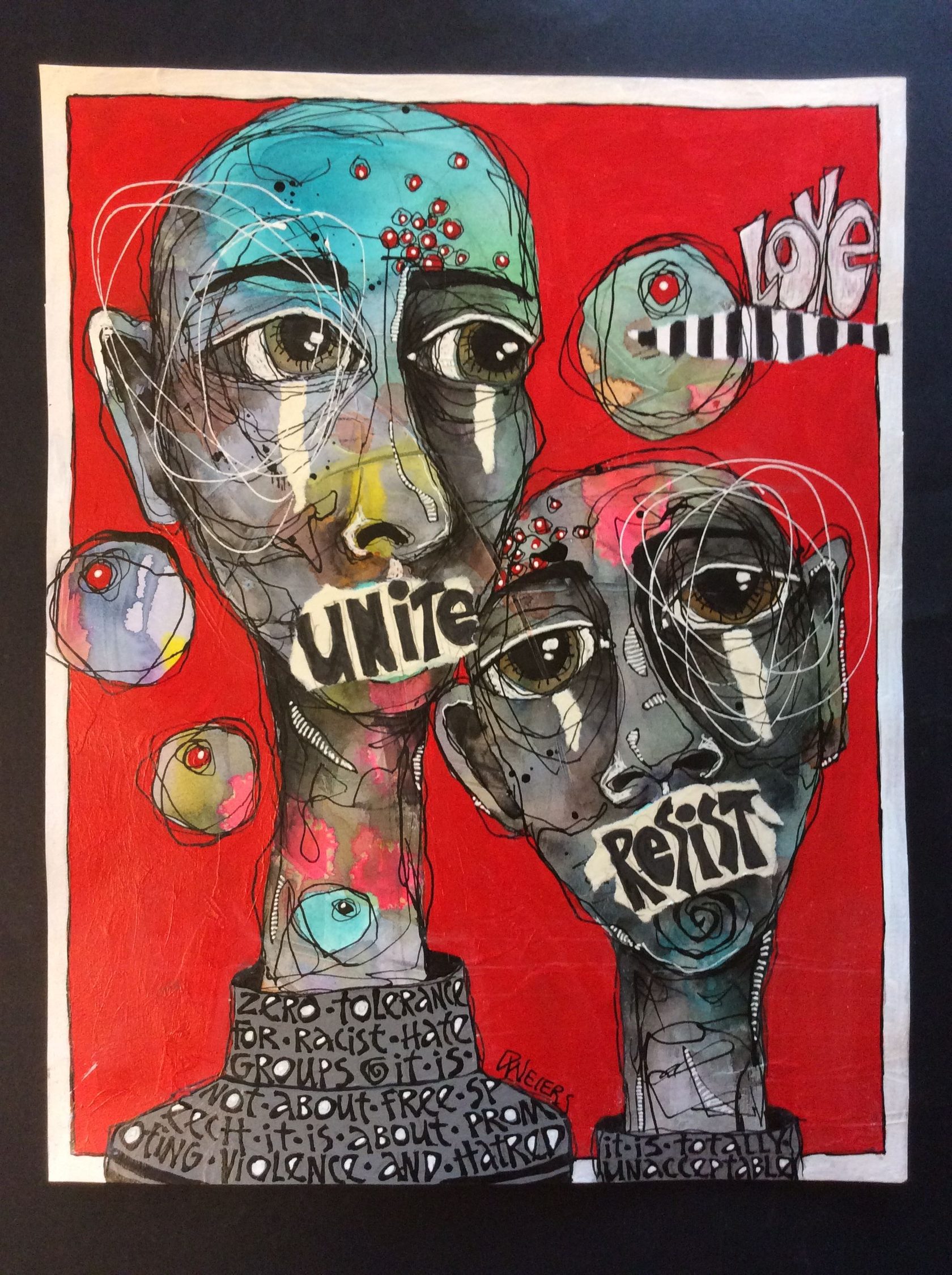
What is most interesting, however, is the growth in coded language and dog-whistles among online hate groups — which seems to be a response to anti-hate speech policies employed by large social media. Such dog-whistles are most often presented in the form of memes, web-comics, or appropriated symbols, most notably the OK sign(????), appropriated by Donald Trump’s online supporters and included in a list of hate symbols by the Anti-Defamation League. Another notable example includes Pepe the Frog and its caricaturised antisemitic variant (officially “buried” by its original author), Happy Merchant meme, and a whole array of web-comics, such as Stonetoss comics.
These fringe groups use humour and coded language as a means to appear harmless, avoid bans and shadowing, and employ, “lure” other people into their midst.
Hate against minorities such as Jews, Roma and Muslims is finding a vociferous outlet online and shows how worryingly common these sentiments actually are throughout society.
These fringe groups use humour and coded language as a means to appear harmless, avoid bans and shadowing, and employ, “lure” other people into their midst.
Hate against minorities such as Jews, Roma and Muslims is finding a vociferous outlet online and shows how worryingly common these sentiments actually are throughout society.
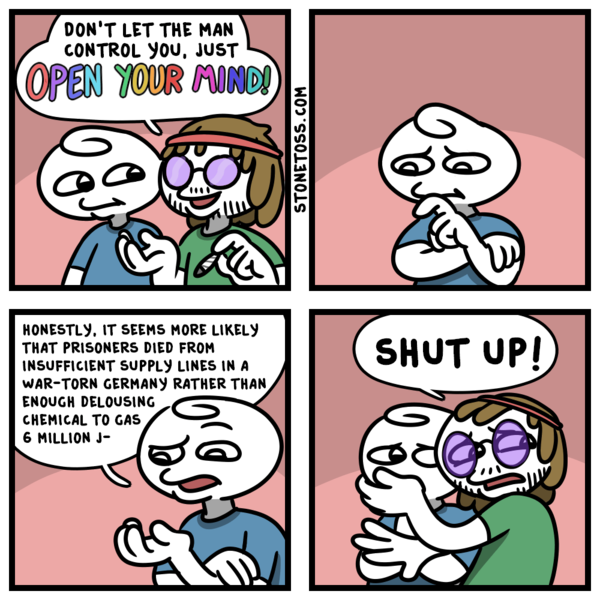
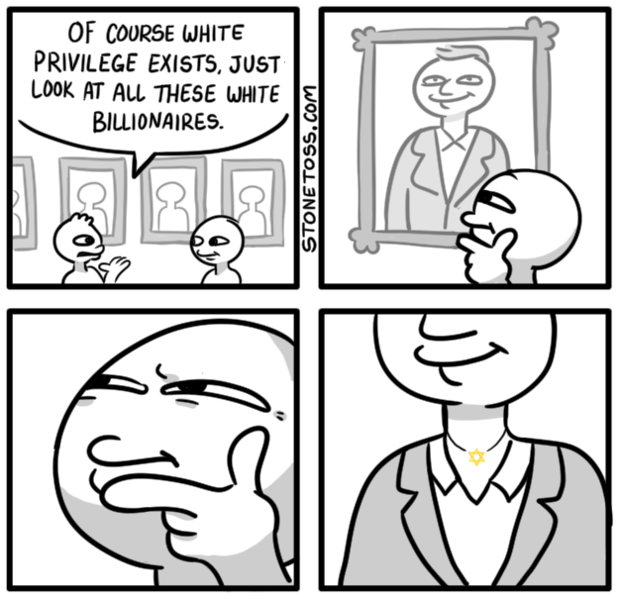
Examples of the most infamous web-comics by Stonetoss; some of his works are openly antisemitic, some employ half-tones and dog whistles.
ANTI-SEMITISM & ANTI-ROMANYISM IN FILM COMEDY
How can film comedy create anti-Semitism and anti-Roma and create gap between Jewish people and non-Jewish people and Roma and non-Roma people? And how can film comedy do the opposite?
In the period around the second world war, where the Nazi’s used film comedy for the formation and maintenance of anti-Semitism in Nazi Germany. Weinstein (2019) sees film comedy in Nazi Germany as instrumental in normalizing and legitimizing Anti-Semitic thoughts, among the German population.
But even today there are comedy films that exhibit anti-Semitic and anti-roma thought and stereotypes.
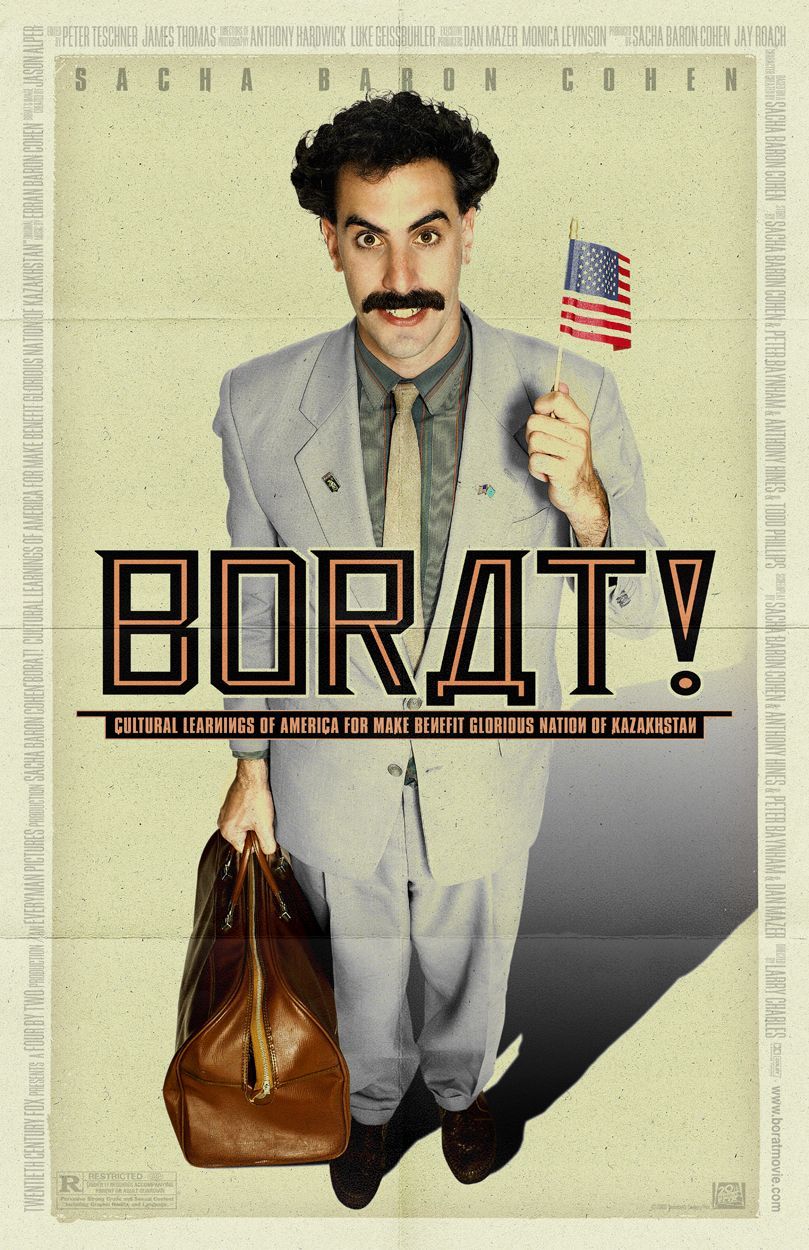
One of the best examples is the film Borat: Cultural Learnings of America for Make Benefit Glorious Nation of Kazakhstan(2006). Where the jokes of Sascha Baron Cohen’s (Who plays Borat) infamous mockumentary usually fall on the bigots, not the victims, of oppression. But a lack of real Roma representation means that while other communities get to see themselves humanized onscreen, anti-Roma quips instead reinforce dangerous stereotypes. The biggest problem of that film is that Borat frequently targets the gypsies taken to mean Roma People and other minor society’s like Jews and LGBTQ+ (Goldman Kay, 2020). But the film’s jokes about the Roma differ from its quips about other minorities because it doesn’t give Roma people the opportunity to present themselves. The already experienced Stereotypes are further developed by not allowing the Roma’s to speak for themselves or even worse by not even filming them. Due to the negative lighting of the stereotypes, the region as a whole and reflect a broader blind sport in Americans’ knowledge of the post-Soviet world (Goldman Kay, 2020).
But comedy can also do the opposite. All that Yvan Attal tries to do on the basis of the sketch comedy “The Jews (Ils sont partour)” (2016). the gimmick is to try and debunk various stereotypes about the titular people — “they’re rich,” “they hold all the power,” “they killed Jesus,” etc. — by turning said stereotypes on their heads. But the problem in this original if highly overwrought French pastiche is that Attal, who is Jewish himself, winds up inadvertently disproving another cliché, which is that Jews are supposed to be funny (Mintzer, 2016). The aim of Attal's comedy is not only to be humorous but also to influence the current political climate in France, where anti-Semitism is on the rise and terrorists have specifically targeted Jews in recent attacks. That’s why “The Jews” is an good attempt to play down popular myths is certainly welcome.
To conclude, therefore, we can see that humor can be used in two ways. Firstly, film comedy can lead to stereotyping being reinforced by giving the wrong picture without providing context on the subject.
A second way in which comedy can influence anti-Semitism. Is the way that Attal uses comedy to eliminate stereotypes about Jews in the 21 century.
CONTROVERSY OVER JEWISH CARICATURES AT THE CARNIVAL IN AALST
Once a year the people of Aalst (City in Flanders) get special attention in the Belgian News, because their carnival, well known in Belgium. The carnival is a widely supported three-day folk festival with a typically mocking and mildly anarchistic character. Creativity, humor and solidarity between different strata of the population determine Aalst Carnival and by extension the identity of the city of Aalst (Stad Aalst, 2020). The starting point of the three-day celebration is to catch up on current affairs, question the usual order, turn the roles literally and figuratively, laugh with everything and everyone: mockery and satire are the thread running through the carnival three-day celebration. (Stad Aalst, 2020).
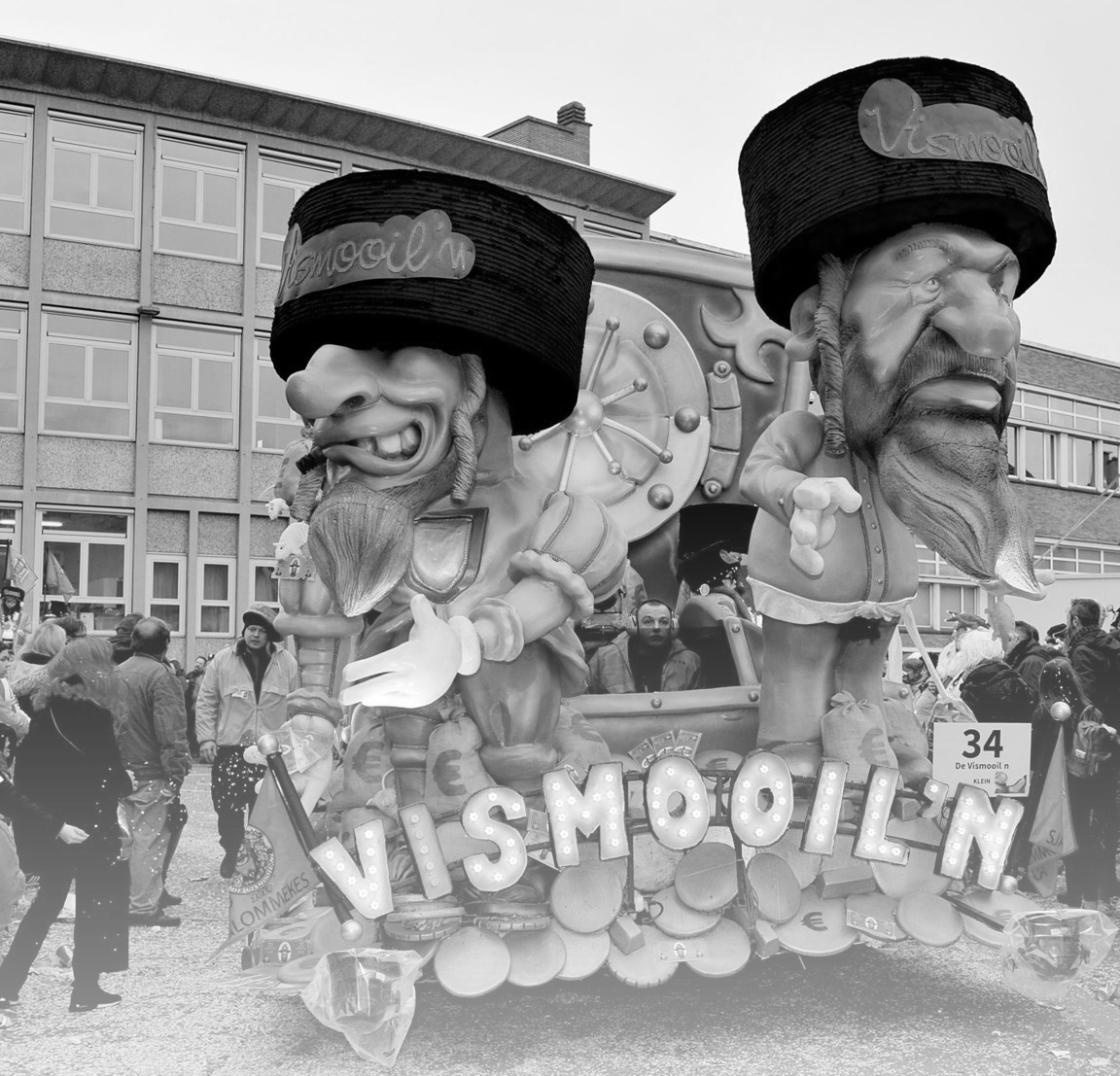
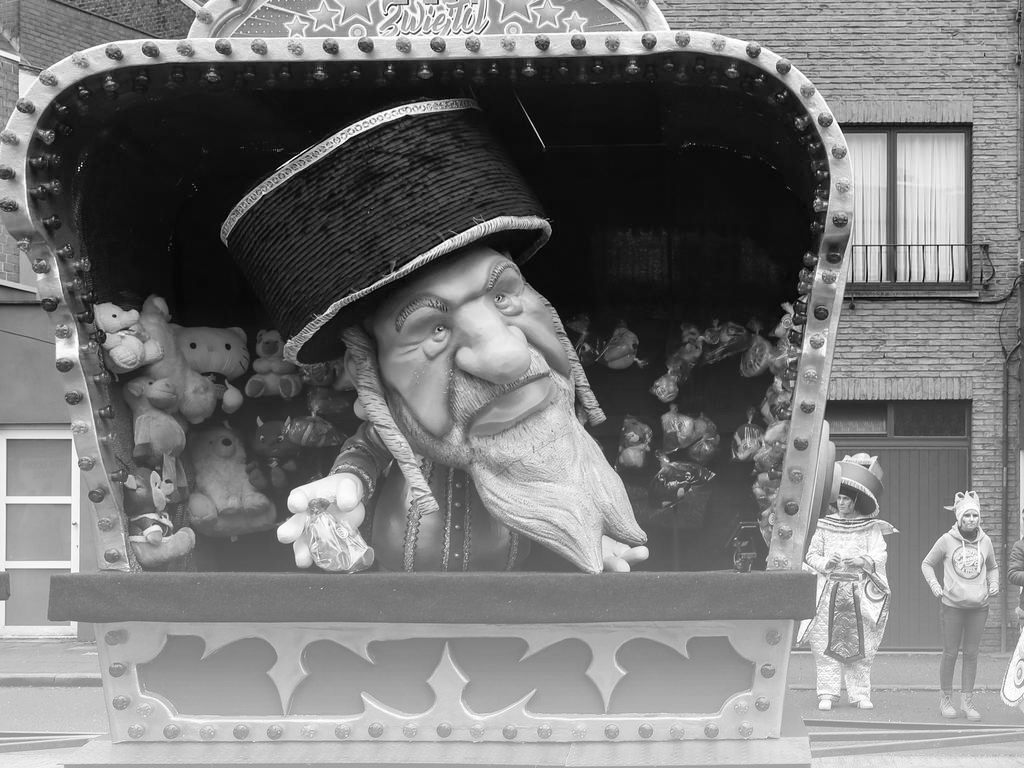
But in 2019 the carnival came under fire, when its annual three-day carnival featured a float depicting Jewish figures with massive heads and hooked noses sitting atop a pile of coins. One figure had a rat perched on his shoulder (Bernhard, 2019) (Picture 1). These Jewish figures caused a great deal of commotion, which led to various bodies wanting to have their say on the matter.
The first person who wanted to say something about that specific case, was the then mayor of Aalst Christoph D’Haese. Who defended the float told many reporters that “there is no racism in Aalst and no anti-Semitism either,” but no one should be safe from ridicule. He has described his city as “the capital of humor and satire.” (Wax and Tritschler, 2020).
The people of Aalst themselves also had an outspoken opinion on the incident. A 24-year old factory worker said “I’m aware of everything that [happened in] World War I, World War II, I know everything. But for me, everything that happens in these three days has nothing to do with the world. It’s just us. It’s hard to convince the world.”
Also Jewish society made its voice public. “It gives another signal to Jews that they are not welcome in Europe,” said Rabbi Menachem Margolin, leader of the European Jewish Association based in Brussels.
But the commotion did not stay only in Belgium. Even the European Commission Vice President Margaritis Schinas also slammed the Aalst carnival. “The #aalstcarnival is a shame. It needs to stop. No place for this in Europe,” tweeted Schinas, whose portfolio of “promoting our European way of life” includes fighting anti-Semitism. Also Israel’s ambassador Emmannuel Nashon made a statement, I think some people should be punished and pay a price for what happened yesterday,” (Max and Tritschler, 2019).
We can now say that there are two different views on this case. The first one is the one of the people of Aalst. The second one is how others that are not part of the carnival look at it. But how can it be that the people of Aalst didn’t wanted to admit that they have exaggerated? It’s because there is no no active Jewish community in the city, many townspeople may have failed to grasp the potential harm caused by the float, according to Hans Knoop (Bernhard, 2019).
This text should not end with an answer but with a question you can ask yourself : “Do you need to laugh about everything or is there some frontier with good behavior or respect for the other people?”(From a 67, Jewish- Flemish businesswoman) (Wax and Tritschler, 2020).
FREEDOM OF SPEECH AND ITS DOUBLE STANDARDS
It is clear that Europe cherishes its right to freedom of expression and is therefore not afraid of making satirical Muslim cartoons and Jewish caricatures although these are not to everyone's liking. However, there is a clear difference in the reaction to each of these cartoons. There are the controversial Muhammad cartoons by Charlie Hebdo, among others, which have caused quite a stir in France. According to Muslims, these cartoons are Islamophobic because they mock their faith and their prophet Mohammed. The cartoons have led to attacks on Charlie Hebdo in 2015 and recently on a French teacher, Samuel Paty in 2020. This has led to massive reactions from political leaders such as France's own President Macron who sees the cartoons as a form of freedom of expression and therefore will never ban these cartoons (Reuters Staff, 2020). In addition, the Belgian minister Bart Somers also sees the Mohammed cartoons as freedom of speech, and it must be absolutely possible to include these cartoons in civic integration courses (Lallemand, 2020). On the other hand, there are Jewish caricatures that are very sensitive to Jews but also to Europe. For example, there is the Aalst Carnival where there is an ongoing debate about the Jewish caricatures which, according to the Jewish people, are antisemitic (see: Controversy over Jewish caricatures at the carnival in Aalst (Belgium). These kinds of events ultimately lead to reactions from Bart Somers, among others, who states that these caricatures are morally, ethically and humanly irresponsible. In addition, the Aalst mayor D'Haese calls for respect for the sensibilities of others (Santens, 2020). Now, why are the Muslim cartoons considered free speech while Jewish caricatures are considered problematic? To answer this we have to look back to historical processes and important historical events.
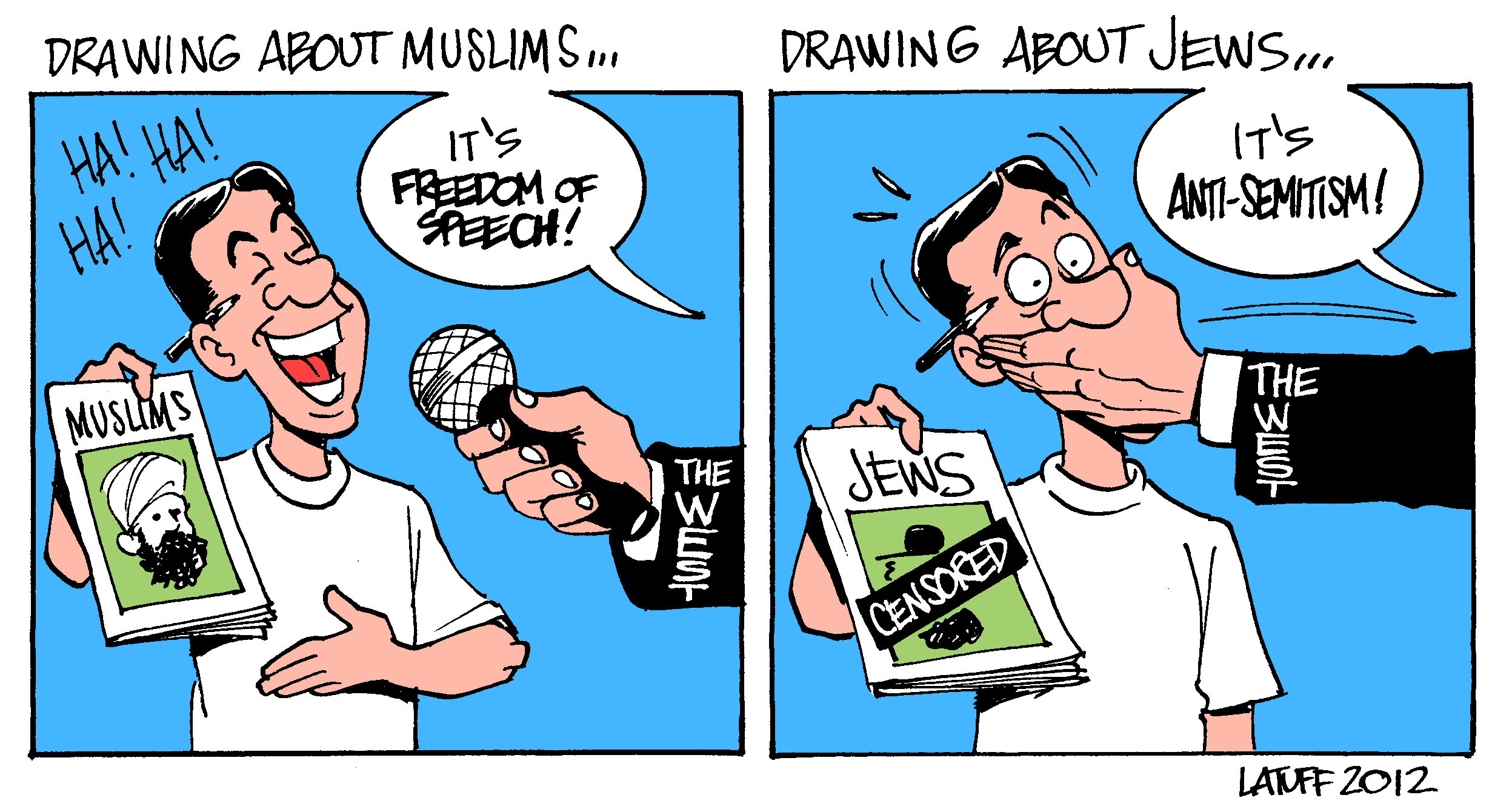
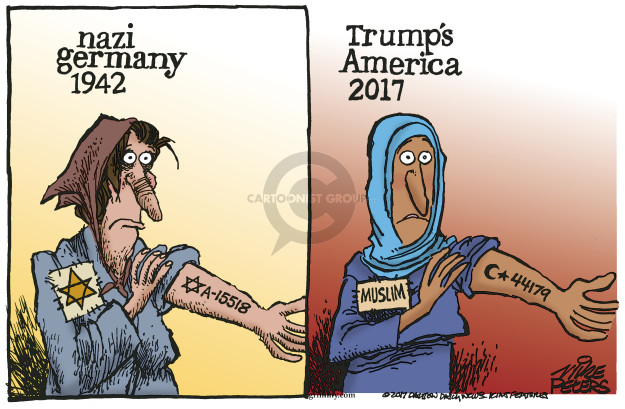
Once Jews were the most hated people in Europe, but that place seems to have gradually shifted and given way to Muslims. Since the terrorist attacks of 9/11, the whole world has been focusing on Islam and therefore also on the Muslim population. According to the dominant Islamophobic discourse, Muslims are fundamentally different, making it impossible to integrate them into Western culture. The Jewish people, on the other hand, now seem to be accepted by Europe. This is mainly because the Holocaust is central in today's Europe, which has learned its lessons from the barbaric suffering of Jews through all kinds of exclusion and intolerance (Bunzl, 2005). As a result, antisemitism will always be Europe's top priority (Bunzl, 2005). This is also clear from the slogan of the then French Prime Minister Valls, 'la lutte contre le racisme et l'antisémitisme' which excludes Islamophobia (Renton & Gidley, 2017). Although France strongly contributed to the former antisemitism during colonization, French colonial scholars were of the opinion that Jews, unlike Muslims, were closer to French civilization (Silverstein, 2008). Jews have also been approved to a larger extent than Muslims in today's United Kingdom and are in a stronger position because Jews faced a lot of discrimination in the past which opened up room for better acceptance in the UK (Hargreaves & Staetsky, 2020). In addition, European Muslims hold a grudge against Jews because, according to them, they are part of the European hegemony that marginalizes Muslims (Bunzl, 2005). This only confirms the fact that Jews are (finally) part of Europe.
The Muslim now appears to be the dangerous ‘other’ from whom Europe must be protected. All this makes it clear that every Jewish caricature or cartoon is a painful reminder of the Holocaust both for Jews and Europe. On the other hand, Muslim cartoons are considered free speech because Islamophobia has been normalized by politics and the mass media.
The Muslim now appears to be the dangerous ‘other’ from whom Europe must be protected. All this makes it clear that every Jewish caricature or cartoon is a painful reminder of the Holocaust both for Jews and Europe. On the other hand, Muslim cartoons are considered free speech because Islamophobia has been normalized by politics and the mass media.

see references on the about page or click the book
